
The most famous chess game ever played
One move wins. The obvious one is a draw. Paris, 1858.
6:28·Paul Morphy vs Duke of Brunswick & Count Isouard·Paris, 1858
The obvious one, taking the knight on d7, turns this winning position into a dead draw.
The move that mates gives away the queen. It was found in eighteen fifty-eight, by a man who was trying to watch an opera.
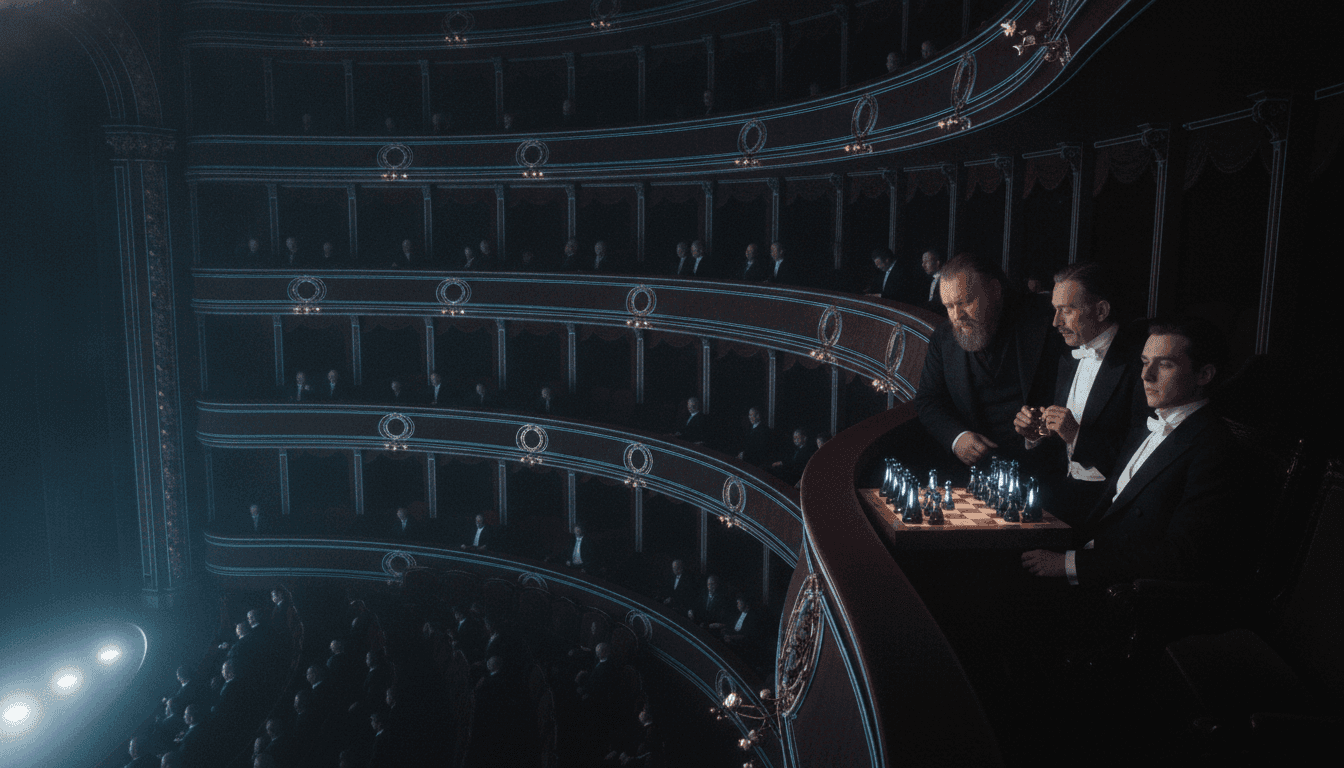
Paris, eighteen fifty-eight. The Italian Opera, on a night when the house is full.
Chess is what the boxes do between the acts. A small board, bad light, and half an eye on the stage.
There is no clock, nobody keeping score, and no reason at all to write any of it down.
One of these games was written down. It has been replayed for a hundred and sixty-eight years.
The young man with his back to the stage is Paul Morphy. He is twenty-one, and the best chess player alive.
His hosts play him together: the Duke of Brunswick, whose box it is, and Count Isouard.
His plan is simple. Finish, and turn around.
The first moves are ordinary. Black picks a solid, quiet defence, and shuts in his own bishop with the pawn on d6.
Morphy claims the centre with d4. Black pins the knight with his bishop -- active, natural, and the first thing Morphy can punish.
He takes on e5 immediately. Black would love to take back with the pawn. He cannot.
Because if the pawn takes, the queens come off with check.
The king recaptures by hand, losing the right to castle, and the knight wins the pawn straight back.
So the bishop takes the knight, the white queen recaptures, and only then does Black restore the pawn.
Count what changed. Morphy has a developed queen and both bishops. Black moved one bishop three times and traded it.
The bishop comes out pointing at f7, the one square on the board that only the black king defends.
Black develops a knight. Morphy swings the queen to b3, and now two pieces stare at that same square together.
The same queen also attacks b7, on the other side. Two threats, one move, and no good answer to both.
Ignore the threat and it is over in two moves. The bishop takes on f7 with check.
The king has one square. It steps to e7, and the queen mates on e6.
So the queen has to come to e7 to hold f7 -- which buries the bishop on f8 behind her.
Here Morphy could take the free pawn on b7. An engine would. He develops a knight instead.
Because taking invites a check on b4, the queens come off, and an attack turns into an endgame.
Still winning, but only by two pawns. What Morphy plays instead is worth more than five.
Black defends b7 with a pawn. Morphy pins the knight to the queen, and every white piece is now doing a job.
And here it comes. Black pushes b5, to hit the bishop and win a move.
Opening a line beside your own uncastled king, against a player with everything developed, is the last thing you do.
Morphy does not move the bishop. He gives the knight away.
Black had a defence here that almost nobody mentions. Check on b4 first, before taking anything.
The queens come off, the knight on b5 is still there to be taken, and Black is worse but alive.
They take the knight. The most human move on the board, and the one that loses.
The bishop checks from b5. The knight must block on d7, where it is pinned against its own king.
Now the move of the game. Morphy castles queenside, hiding his king and landing a rook on d1 in one move.
Castling the other way was legal. It is worth three whole pawns less. This rook has to arrive on that file.
Black brings a rook across to defend. Morphy gives his rook up for the knight, to keep the pin.
Then the second rook takes the first one's place. That is every piece Morphy owns, and all of them attacking.
Now look at Black. The bishop on f8 and the rook on h8 have not moved all game. They never will.
And listen to the engine. Two pawns when the bishop came to g5. Five when they took the knight. Seven now.
Two more trades, and here we are again. The knight on d7 is the only thing holding Black together.
That knight blocks the d-file, so the rook cannot reach d8. And it covers b8. It is doing two jobs at once.
White to move. There is a mate here. Take your time.
Queen to b8. Check.
In the box, nobody says anything. He has put his queen where a knight can take it.
She is defended by nothing, and there is exactly one legal reply on the board. The knight must take her.
The knight takes. And the moment it leaves d7, the file behind it is open.
And the rook lands on d8. Checkmate.
The king cannot take the rook, because the bishop is defending it from across the board.
Every other square is covered by that same bishop, or blocked by one of Black's own pieces.
Seventeen moves. He gave away a knight, a rook and his queen, and three black pieces never moved.
That is the whole lesson. Material is a means. Time is what you are actually spending.
Given this game today, a modern engine plays fourteen of Morphy's seventeen moves itself. The other three cost half a pawn.
And then he turned around, and watched the rest of the opera.
The board is still there, in the studio beside this player. Take the Duke's side, and do better.
There is exactly one move on this board that forces mate. Every other move lets the game go on.
Transcript· click any line to jump there
What this game teaches
- Time is the currency of an attack -- Morphy gave away a knight, a rook and his queen to keep it.
- A king in the middle turns every open line into a threat, which is why 9...b5 lost the game.
- The winning move is often the one that looks like a blunder: 16.Qb8+ mates, 16.Rxd7 draws.
The moves
1. e4 e5 2. Nf3 d6 3. d4 Bg4 4. dxe5 Bxf3 5. Qxf3 dxe5 6. Bc4 Nf6 7. Qb3 Qe7 8. Nc3 c6 9. Bg5 b5 10. Nxb5 cxb5 11. Bxb5+ Nbd7 12. O-O-O Rd8 13. Rxd7 Rxd7 14. Rd1 Qe6 15. Bxd7+ Nxd7 16. Qb8+ Nxb8 17. Rd8# 1-0